
The 4 Best MPH Programs in Connecticut for 2027
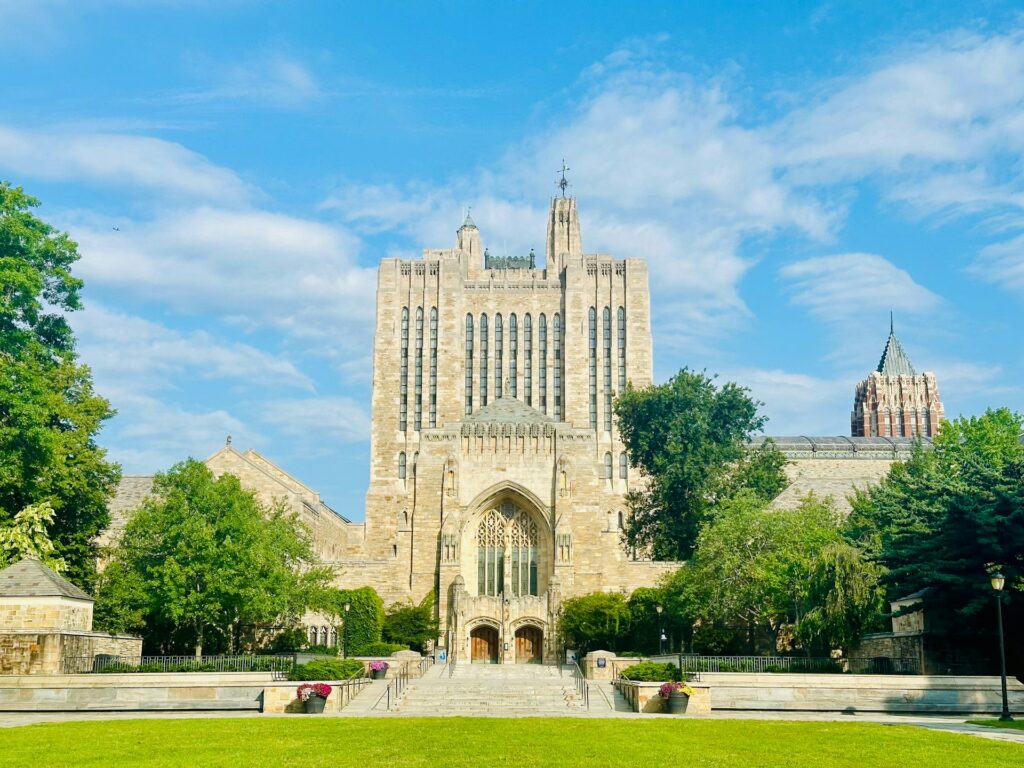
You are lucky if you are looking at MPH programs in Connecticut, because your options range from the Ivy League to the esteemed UConn and other private institution programs.
Connecticut offers three CEPH-accredited options that deliver programs focused on hands-on learning and community partnerships. Whether you’re looking for a program that can be completed in 15 months or one with extensive research opportunities, Connecticut’s programs have a lot to offer.
This review looks at four of the best MPH programs in Connecticut for 2026 and breaks down their structures and strengths to help you make an informed decision.
1. Yale School of Public Health MPH Program
Yale School of Public Health ranks 11th nationally among schools of public health. This marks the institution’s best ranking position and represents a three-position jump from its previous 14th place standing. The school offers multiple pathways to earn an MPH degree and accommodates students at different career stages with varying professional backgrounds.
Pathways
Most students choose the traditional two-year MPH program as their primary pathway. This program requires completion of 20 course units over four semesters, plus an Applied Practice Experience. Students select their focus area from six academic departments: Biostatistics, Chronic Disease Epidemiology, Environmental Health Sciences, Epidemiology of Microbial Diseases, Health Policy and Management, or Social and Behavioral Sciences. The Health Care Management Program offers another specialization option and partners with Yale School of Management to combine public health training with business acumen.
Professionals who already hold advanced degrees or substantial work experience can take the Advanced Professional MPH, an accelerated 11-month pathway. This program accepts individuals with doctoral degrees in health-related fields, those with master’s degrees plus two years of relevant experience, or candidates with bachelor’s degrees and at least five years of pertinent work experience. The program begins with an intensive seven-week summer session from July through August and continues with two full-time terms.
The Executive MPH caters to working professionals through a two-year, part-time format that blends online education with in-person leadership training. Students can select up to two tracks from four options: Health Informatics, Environmental Health Sciences, Applied Analytic Methods and Epidemiology, or Critical Topics in Public Health.
Key Features and Structure
Yale’s MPH curriculum builds around a core foundation that every student completes, whatever their departmental focus. The core has four courses that cover biostatistics, epidemiology, social and structural determinants of health inequities, and health policy and health care systems. Students also participate in a two-part Professional Skills Seminar designed to develop practical competencies for public health practice.
The 20 course unit requirement allows flexibility for students to customize their education. Students take 5-10 elective courses from Yale University beyond core requirements and departmental courses. This cross-university enrollment lets students draw from law, environmental studies, social sciences, management, divinity and other disciplines to build interdisciplinary expertise.
Students can add depth to their degree through six available concentrations or tracks. These have Global Health Concentration, Public Health Modeling Concentration, Implementation Science Track, and the Maternal and Child Health Promotion track. The Maternal and Child Health track takes a multidisciplinary approach to implementing evidence-based practices for improving outcomes.
The Applied Practice Experience is a graduation requirement for all two-year MPH students. This immersive experience allows students to apply classroom knowledge in ground settings. Students travel globally for summer internships and work with international organizations, government agencies, nonprofits and research institutions. The Career Management Center and Office of Public Health Practice provide guidance to identify placements and structure projects that meet degree requirements.
The second academic year typically has either a master’s thesis or capstone project. Students in Biostatistics, Health Policy and Health Care Management complete capstone courses rather than theses, while Social and Behavioral Sciences students can choose between options.
What Makes It Stand Out
Yale maintains a student-to-faculty ratio of approximately 3:1, with average incoming class sizes of 240 students. This low ratio makes personalized attention and mentorship opportunities possible that larger programs cannot provide. Students receive support from multiple advisor types throughout their enrollment: career management staff, academic advisors, public health practice coordinators, wellness counselors, and student and alumni mentors.
The school’s Biostatistics program earned a 13th place ranking nationally and tied with Brown, Vanderbilt, Duke, and the University of Texas MD Anderson Cancer Center. This recognition reflects the program’s strength in quantitative methods and data science applications for public health.
Yale’s interdisciplinary approach extends beyond typical public health boundaries. Faculty members bring expertise from law, medicine, business, engineering and other fields. Environmental Health Sciences has engineers and law school faculty, which creates viewpoints that merge technical knowledge with policy understanding. This cross-disciplinary integration appears throughout all six departments.
Research initiatives demonstrate Yale’s commitment to addressing current public health challenges. The Humanitarian Research Lab brings together faculty and students to research and respond to humanitarian crises worldwide. The Yale Center on Climate Change and Health trains future leaders to tackle climate-related health challenges and uses Yale’s multidisciplinary expertise and global reach.
Students involve themselves in community-based work beyond academic settings. Faculty and students implement programs in New Haven community health initiatives and conduct projects internationally. Innovate Health Yale supports social entrepreneurship in public health, while the Humanities and Arts in Public Health (HAPPY) program explores creative approaches to health promotion.
Cost and Duration
The two-year MPH program requires students to complete four full-time terms. Tuition costs $57,256 annually. Here’s the complete cost breakdown:
Two-Year MPH Costs
Expense Category | First Year | Second Year |
Tuition | $57,256 | $57,256 |
Program Fee | $675 | $675 |
Books & Course Materials | $1,456 | $1,456 |
Health Insurance | $3,764 | $3,764 |
Housing & Food | $17,862 | $17,862 |
Miscellaneous & Personal | $4,800 | $4,800 |
Local Transportation | $250 | $250 |
Total Estimated Cost | $86,063 | $86,063 |
The Advanced Professional MPH program charges $71,570 in tuition for the 11-month program, with total estimated costs that reach $106,937 when fees and living expenses are included. Executive MPH students pay per credit in the 16-credit program, with tuition that totals $42,330 for year one and $47,974 for year two. All Executive MPH students who don’t receive full external funding get a $10,000 scholarship applied over the two-year program automatically.
All admitted students undergo holistic review for merit scholarship eligibility based on their admissions application information, with notifications sent within 10 days of admission. Tuition typically increases each year, and students should plan when estimating total program costs accordingly.
Career Support and Alumni Network
Yale School of Public Health maintains an alumni community that exceeds 8,000 members distributed globally. The Office of Alumni Affairs partners with the Association of Yale Alumni in Public Health to develop events and programs that connect alumni with each other and the school. Alumni serve as mentors for current students, guest speakers in classrooms and events, and participants in community service initiatives throughout the year.
The Office of Career Management provides continued assistance to YSPH alumni at no cost. The 12twenty platform serves as a 24/7 career tool that connects users to relevant opportunities based on their profile, interests and activity. Alumni can post or browse daily job and internship listings, access career resources, and attend career-related events through this system.
Cross Campus functions as a database of Yale alumni interested in networking with fellow graduates and current students. This searchable network allows alumni to connect for career discussions, share experiences, and offer guidance based on their expertise. The Yale Online Alumni Directory provides another searchable database of Yale graduates around the globe who have registered for networking connections.
Alumni can access Open Yale Courses, the university’s free online education initiative that has attracted over half a million visitors from 187 countries. This resource allows graduates to continue their professional development by taking courses in any discipline at no charge.
2. University of Connecticut MPH Program
UConn’s MPH program has had full accreditation from the Council on Education for Public Health (CEPH) since 1984. The Department of Public Health Sciences at UConn Health operates the program and focuses on Interprofessional Public Health Practice for students pursuing careers in governmental or non-governmental agencies.
Pathways
Three distinct pathways exist for students to pursue the degree. The Standalone MPH requires 48 PUBH-related credits over two years of full-time study or four years part-time. Undergraduate students can transition into the master’s program through the FastTrack BA/BS+MPH pathway, which requires 42 credits total. Dual Degree options enable completion alongside degrees in medicine, dental medicine, social work, law, or pharmacy and also require 42 credits with 36 earned through PUBH courses and 6 shared credits from the complementary degree program.
The program admits students on a competitive basis. Recent data shows 106 applications, 40 acceptances, and 27 enrolled students. An academic record relevant to public health, official transcripts, a personal statement that outlines career plans, and three letters of recommendation are required for admission. Applications for fall admission close February 1st for domestic students and January 1st for international applicants, with a $75 application fee.
Key Features and Structure
The Standalone MPH curriculum distributes 48 graduate credits across five foundational courses (15 credits), three concentration courses (9 credits), a two-semester Applied Practice Experience (6 credits), five elective courses (15 credits), and a capstone project as the Integrative Learning Experience (3 credits).
Foundational courses cover public health disciplines. Students complete PUBH 5403 Health Administration, PUBH 5404 Environmental Health, PUBH 5405 Social & Behavioral Foundations of Public Health, PUBH 5408 Epidemiology & Biostatistics I, and PUBH 5409 Epidemiology & Biostatistics II. Concentration courses focus on interprofessional practice through PUBH 5406 Law and Public Health, PUBH 5411 Introduction to Interprofessional Public Health Practice, and PUBH 5431 Public Health Research Methods.
The Applied Practice Experience (APE) spans two semesters during the second year of study and requires students to complete 170+ hours of offsite fieldwork under agency-based preceptor supervision. This practical component spreads over 30 weeks and covers late-fall and early-spring portions of the academic year. Students present to faculty and site preceptors at the end. Dual Degree students complete a one-semester APE instead of the two-semester requirement.
Elective courses organize around the three core functions of public health: assessment, assurance, and policy development. Students select electives to build specialized knowledge that matches their career interests. All students must complete a 3-credit Capstone Project (PUBH 5495) as the Integrative Learning Experience. This project demonstrates mastery of public health competencies through dissemination and integration of established knowledge to reduce population health concerns.
Students who completed relevant coursework at other institutions or at UConn prior to admission may request transfer or waiver of up to 6 credits. This reduces the minimum requirement from 48 to 42 earned credits. Transfer approvals base decisions on content appropriateness, requirement equivalence, and minimum grades of B. Students pursuing graduate certificates alongside the MPH may request similar 6-credit waivers that acknowledge relevant certificate coursework.
The program keeps rigorous academic standards and requires students to enroll in a minimum of 6 credits per semester for satisfactory progress. Students must maintain a cumulative GPA of 3.0 with no grade below B in foundational or concentration courses to remain in good standing. All degree requirements must be completed within 6 years of first enrollment.
What Makes It Stand Out
The program’s interprofessional approach sets it apart from traditional masters in public health programs. Graduate students from social work, law, pharmacy, medicine, and dental disciplines cooperate to address public health challenges. This creates interactions with professionals they’ll work alongside after graduation. This cross-disciplinary model prepares practitioners for 21st-century careers that require coordination across skill sets and points of view to achieve systems-level improvements.
Faculty composition reflects this interprofessional commitment, with 40 total faculty members that include 12 full-time and 28 part-time instructors. Faculty research focuses on cancer epidemiology, birth defects, gerontology, health manpower, and health services. The student body shows diversity, with 69% female and 30% male enrollment. Racial and ethnic composition has 58% White, 10.4% Black or African American, 7.2% Asian, 6.4% Hispanic/Latino, and 6% international students representing multiple countries.
Practical learning opportunities extend throughout the curriculum. The program puts emphasis on hands-on experiences through internships, research projects, and fieldwork. Graduates gain skills to address real-life challenges. Students complete a minimum of 20 hours of intentional community action at approved external governmental or non-governmental service agencies, small local businesses, or community-based organizations.
The program encourages a strong sense of community among students and alumni. This creates a supportive network that extends beyond the classroom. This community makes easier networking opportunities, peer support, and collaboration that boost the overall student experience and provide lasting professional connections.
Cost and Duration
Full-time students complete the degree in two years (minimum 12 credits per semester), while part-time students finish within four years (minimum 6 credits per semester). The tuition rates vary between in-state and out-of-state enrollment:
Per Semester Tuition and Fees
Credits | In-State Total | Out-of-State Total |
6 credits | $6,871 | $14,179 |
9+ credits | $10,123 | $21,079 |
Annual costs total $22,872 for in-state students and $44,784 for out-of-state students at full-time enrollment of 9+ credits per semester. These figures have all mandatory fees that cover general university services, student health and wellness, recreation center access, infrastructure, matriculation, activities, transit, and technology.
Several financial support opportunities help offset costs. The Holger Hansen Fellowship provides a tuition waiver and annual stipend to selected students under program mentorship. The fellowship covers 26 pay periods unless students complete the program or withdraw earlier, with prorated adjustments. The Joan Segal Scholarship awards tuition support to students from underrepresented backgrounds who lack financial resources for graduate education. Sisters in Public Health offers two $1,000 scholarships through The Frazier Fund and The Lockett Award.
Course Assistant positions employ up to 10 students each semester and pay $5,000 per course for helping instructors in undergraduate and foundational courses. Research assistantships provide additional funding options through FAFSA applications due February 1. MD/MPH and DMD/MPH dual degree students can access specific tuition aid applications.
Career Support and Alumni Network
UConn tracks alumni outcomes through a detailed data linkage project that connects institutional student data with state workforce information and educational records. This tracking system assesses program effectiveness, informs curriculum development based on workforce patterns, boosts career services guidance, and calculates return on investment metrics for degree programs.
The Center for Career Development provides ongoing support through workshops, events, and online resources. Students boost self-knowledge, clarify career aspirations, prepare professional materials for different pathways, research organizations and industries, and connect with employment opportunities both in-person and online. These services extend to alumni at no cost beyond graduation.
The program operates a coordinated advising system from admission through graduation and beyond. Students receive assignments to tandem teams of program and academic advisors, with procedures available to change advisors when more optimal pairings emerge. Faculty recognize students each spring for exemplary academic and practice performance.
3. Southern Connecticut State University MPH Program
Southern Connecticut State University partners with Yale School of Public Health to aid the Community Alliance for Research and Engagement (CARE), an initiative that improves health outcomes in New Haven’s underserved communities. The university has full accreditation from the Council on Education for Public Health (CEPH) and offers two MPH programs designed for different career trajectories.
Pathways
The MPH in Health Promotion provides both on-campus and online delivery options. Students prepare for community leadership roles through complete training in public health’s core disciplines, independent research experience, and hands-on fieldwork. Students can pursue health promotion concentration courses and access study abroad opportunities. The university also offers an online Executive MPH in Management and Leadership program that targets mid-career professionals seeking management roles in insurance, government, biotechnology, and research industries.
Application requirements have a minimum undergraduate GPA of 3.0 in the graduate major field or 2.5 overall, plus an interview. The program received 131 applications, accepted 53 students, and enrolled 35 for recent admission cycles. Domestic applicants face a March 15th deadline with a $50 application fee.
Key Features and Structure
The Health Promotion MPH requires 48 credits spread among required courses, concentration courses, directed electives, and a capstone project. Students must earn a C+ or higher in all courses and maintain a 3.0 cumulative GPA to graduate. Required courses total 27 credits. These cover PCH 500 Foundations of Public Health, PCH 510 Environmental Health, PCH 515 Biostatistics, PCH 516 Public Health Research, PCH 520 Social and Behavioral Foundations in PH, PCH 548 Public Health Administration, PCH 551 Epidemiology, PCH 564 Health Systems and Policy, and PCH 595 Public Health Internship.
The Health Promotion concentration adds 9 credits through PCH 504 Health Promotion Practice, PCH 577 Program Planning and Evaluation, and PCH 586 Health Promotion Methods. Students select three graduate level electives (9 credits) and complete a 3-credit capstone through PCH 593 Special Project Capstone.
The Executive MPH in Management and Leadership reduces the requirement to 42 credits. Core requirements mirror the Health Promotion track at 27 credits. The Management and Leadership concentration substitutes three courses: PCH 526 Diversity in Health Organizations, PCH 549 Public Health Leadership, and PCH 550 Strategic Planning for Health Organizations. This program has 3 elective credits and the same capstone requirement.
What Makes It Stand Out
The program emphasizes hands-on learning. Internships and class activities center on community partnerships. Students often plan public health programs from inception to evaluation. They tackle projects like awareness campaigns about binge drinking on college campuses, blood drives, or educational initiatives on hepatitis B and eating disorders.
Students can join the Public Health Society or participate in the Environmental Health Training Program (EHTP), a workforce development initiative co-sponsored by the university’s Department of Public Health and the Connecticut Department of Public Health. The program maintains 11 full-time faculty members, with 3 male and 8 female professors.
Student demographics reflect diverse representation. Women comprise 86.7% of health professions master’s degree recipients. Racial-ethnic minority graduates make up 22.5% of the health professions master’s degrees awarded. The program granted 120 master’s degrees in health professions during the 2019-2020 academic year. The student body has 5% international students, 17.44% Black or African American, 8.14% Hispanic/Latino, 56% White, and 2.33% Asian students.
Cost and Duration
Tuition rates averaged $438 per credit hour for in-state students and $444 per credit hour for out-of-state students. Here’s the estimated total cost breakdown:
Program Cost Comparison
Program Type | Credits Required | In-State Total | Out-of-State Total |
Health Promotion MPH | 48 credits | $21,024 | $21,312 |
Executive MPH | 42 credits | $18,396 | $18,648 |
Financial support options have scholarships, loans, graduate assistantships, and career-related internships. Students should submit FAFSA applications by the April 15 deadline to consider financial awards.
Career Support and Alumni Network
The Office of Career & Professional Development works with the Office of Alumni Relations to support alumni for up to three years after graduation. Services have one-on-one career coaching sessions that cover resume and cover letter reviews, LinkedIn and networking strategy sessions, interview preparation, and job search strategy.
Alumni retain access to JOBS, an online job board for full-time or part-time work, co-ops, internships, and on-campus student employment. The office guides alumni on using LinkedIn to uncover mutual connections and helps identify professionals working in targeted industries. Alumni maintain access to Focus 2 Career Assessment and free digital credentials through platforms like Google Career Certificates.
Regional Alumni Networks operate in all Connecticut counties, Boston, Washington, and New York. They coordinate events and programs for local alumni and students. The Department of Public Health maintains an alumni club within the Alumni Association that offers special programs and events. Southern Alumni Magazine publishes twice a year and features profiles on successful alumni and faculty interviews.
4. University of New Haven MPH Program
The University of New Haven holds applicant status for accreditation by the Council on Education for Public Health, awarded from February 17th, 2026 to February 17th, 2028. Both the place-based generalist MPH and BS/MPH dual degree programs undergo review during this period. The program mission centers on preparing public health practitioners through an ethical, person-centered educational experience while advancing population health in West Haven and surrounding areas.
Admission operates through comprehensive review that weighs undergraduate GPA, work experience, statement of purpose and letters of recommendation. Most matriculating students present undergraduate GPAs of 3.0 or higher. Unlike many masters in public health programs, no GRE or GMAT score is required to apply. Applicants submit a 250-word statement of purpose, two professional or academic recommendation letters and a current resume or CV.
Key Features and Structure
The program requires 42 graduate credits that comprise 32 required core credits and 6 restricted elective credits. Required core courses include Foundations of Public Health, Professional Skills in Public Health I and II, Research Methods in Public Health, Principles of Epidemiology, Health, Behavior and Society, Biostatistical Applications in Public Health, Public Health Advocacy and Policy, Introduction to Health Systems, Public Health Practice and Planning, and Program Evaluation. Students also complete either Advanced Epidemiology or Environmental Epidemiology.
The culminating experience offers three pathways: Public Health Capstone, Public Health Internship for Applied Practice Experience, or an Integrative Learning Experience. This accounts for 4 credits. Restricted electives span topics that include Public Health Nutrition, Health Education and Promotion, Global Health, Public Health Emergency Preparedness, Health Analytics, Digital Health, Health Disparities and Inequities, Grant Writing in Public Health, and Control and Prevention of Infectious Disease.
What Makes It Stand Out
University of New Haven operates one of only a handful of STEM-designated MPH programs nationwide. This provides benefits for military, veteran populations and international students. All faculty hold Ph.D. or terminal degrees in their fields, with combined experience exceeding 125 years. Faculty credentials include training at Yale, Johns Hopkins, Vanderbilt, Harvard and the University of Michigan.
Career Support and Alumni Network
Career resources connect alumni with networking opportunities and professional development tools to advance their public health careers beyond graduation.
How to Choose the Right Master of Public Health MPH Program in Connecticut
Choosing the right MPH program in Connecticut depends on your career goals and budget in the end. Yale offers prestigious research opportunities and extensive resources but comes with higher costs. UConn and Southern Connecticut State University provide CEPH-accredited programs with strong community partnerships at more accessible price points. This is why you should weigh factors like specialization options and program format against your budget constraints – but don’t forget about financial aid and scholarships, which are there to make your dreams a reality if finances are an issue.
Each program brings its own advantages to the table. Your next step is identifying which features matter most for your public health career trajectory and then reaching out to admissions offices. You can explore fit and available financial aid options there.