State Public Health Careers
Public health degree jobs at the state level put you on the front lines of keeping entire communities safe – not just individual patients. 56 state public health departments across the United States employ specialists to prevent disease outbreaks, respond to emergencies, and shape the policies that protect millions of residents. The focus here is stopping health problems before they start, tracking infectious diseases, and making sure environmental safety standards are met from one end of your state to the other.
What can you do with a public health degree at the state level? A lot more than you might expect. State public health professionals develop programs to combat ongoing crises, monitor disease patterns, prepare communities for disasters, and push for policies that address health disparities. You essentially become the connection point between scientific research, government action, and the people who need it most.
One thing that makes this field stand out is just how many directions you can take it. State health departments employ a wide range of professionals, including:
- Epidemiologists who track disease outbreaks and analyze health data
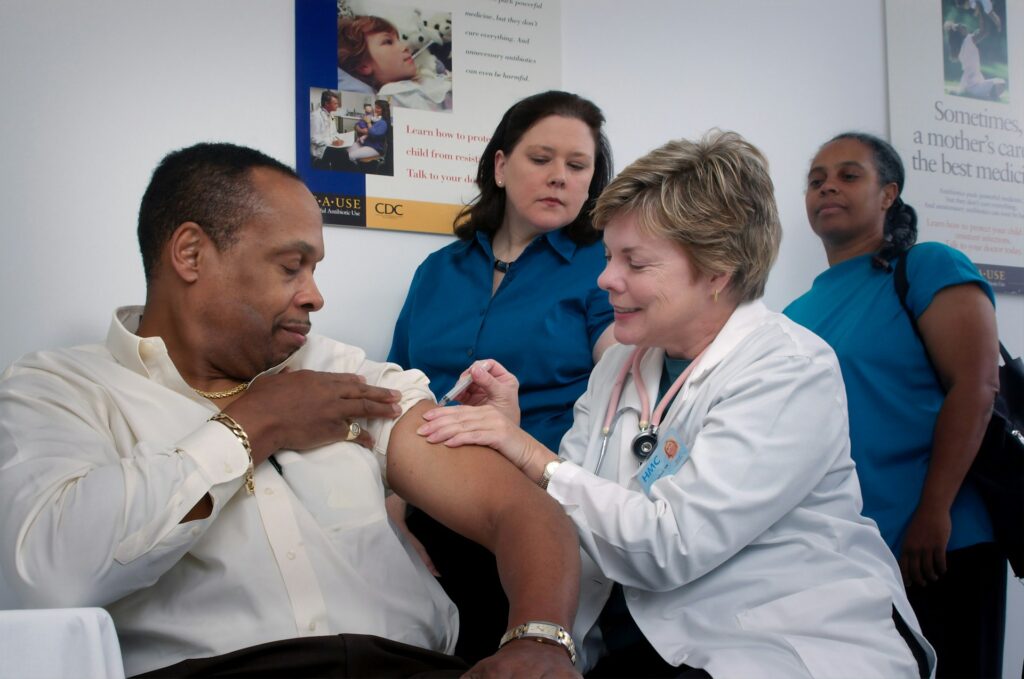
- Public health nurses who administer vaccinations and conduct community visits
- Sanitarians and engineers who inspect restaurants and test water safety
- Health educators who design programs promoting healthy behaviors
- Laboratory scientists who test specimens for contamination
- Nutritionists who develop dietary recommendations
- Biostatisticians who analyze population health trends
- Community health workers who connect residents to services
The options you have depend partly on how your state organizes its health department. 35 state health departments operate as freestanding agencies, while 21 operate within larger organizations that also cover mental health services or human assistance programs. Regardless of structure, every state public health agency shares the same core responsibilities – policy development, resource management, legal compliance, partner engagement, and improving community health outcomes over time. Your role, no matter where you land, contributes to protecting residents through prevention rather than treatment.
Education Needed
Public health degree jobs welcome candidates from a wide range of educational backgrounds – whether your foundation is in biology, education, business, or something else entirely. That flexibility is one of the things that makes this field so accessible, especially for career changers or anyone who discovered a passion for population health a little later in life.
A bachelor’s degree serves as the entry-level requirement for most public health jobs. Both a Bachelor of Arts and a Bachelor of Science prepare you equally well for starting out in the field. While completing your undergraduate program, internships and fellowships give you practical experience and help you figure out which specialization fits you best. With a bachelor’s degree in hand, you can qualify for roles like health educator, research assistant, or community health worker.
Advancing into more specialized positions is where a Master of Public Health, or MPH, becomes important. MPH programs accept applicants with a bachelor’s degree in any major, which makes them a great fit for professionals making a career pivot. One thing to verify before enrolling is that the program carries accreditation from the Council on Education for Public Health (CEPH). Every accredited MPH program covers five core areas: epidemiology, biostatistics, behavioral and social sciences, environmental health, and health administration and policy.
Most MPH programs require 42 credit hours of coursework, around 200 hours of practicum fieldwork, and a culminating assignment. Many programs allow you to complete your fieldwork at your current employer, so you don’t have to choose between school and your job. Dual-degree options that pair public health with dietetics or social work are also available, giving you even more career flexibility. If you’re aiming for research leadership, academic positions, or upper management, a doctorate degree is the path that gets you there.
Certification Needed
Here’s something that surprises many people entering this field – public health jobs do not require a universal national license. For most positions, certification is completely voluntary. That said, earning credentials signals your commitment to professional standards and can set you apart in a competitive job market. Pairing your education with nationally recognized certifications only expands what you can do with a public health degree.
The Certified in Public Health (CPH) is the only broad credential of its kind available to public health professionals. The National Board of Public Health Examiners offers it, and earning the CPH demonstrates your knowledge of key public health sciences along with your dedication to staying current on emerging issues. The exam itself is computer-based, contains 200 multiple-choice questions, and runs over a four-hour testing window. More than 6,500 professionals have earned this credential as of 2026.
To sit for the CPH exam, you need to meet one of the following eligibility pathways:
- Current enrollment or graduation from a CEPH-accredited graduate program
- Bachelor’s degree in any field plus at least five years of public health work experience
- Relevant graduate degree plus at least three years of public health work experience
- Graduate certificate from a CEPH-accredited program plus at least three years of experience
- Faculty status with a graduate degree and at least three years teaching or working in public health
Qualifying work experience covers a wide range of settings – local or state health departments, health systems with public health functions, nonprofits focused on public health, federal agencies with public health missions, and military public health units all count. A 2026 pilot program also extends eligibility to graduates of non-U.S. public health programs that are not accredited by CEPH.
Other certifications target specific roles within the field. The Certified Health Education Specialist (CHES) requires a bachelor’s degree with at least 25 semester credits covering health education competencies. If you pursue a career in environmental health, the Registered Environmental Health Specialist/Registered Sanitarian (REHS/RS) credential is the one to go after. Once you earn your CPH, keep in mind that maintaining it requires at least 50 recertification credits every two years. It’s an ongoing commitment – but one that keeps you sharp and competitive throughout your career.
Potential Job Titles
State health departments organize their workforce into specific job classifications, and many of these require pre-qualification before you can even submit an application. The good news is that the range of public health degree jobs available is wide – spanning clinical, scientific, administrative, and community-focused roles.
Clinical roles cover positions like physician, nurse, dentist, and dental hygienist. Scientific careers bring in epidemiologists who investigate disease patterns, laboratory scientists who test specimens, and data analysts who interpret population health trends. States like Massachusetts also employ researchers, maternal and child health specialists, and health equity strategists alongside traditional clinical staff.
On the community side, health educators, community health workers, outreach specialists, and health navigators make up a significant portion of the workforce. Environmental protection is another major area – sanitarians, food inspectors, and environmental health specialists who conduct inspections and ensure compliance fill these roles. Public health analysts round out the scientific workforce by collecting and analyzing data to inform policies on infectious diseases, environmental hazards, substance abuse, and healthcare access.
Administrative positions include program managers, program coordinators, policy analysts, and operations specialists who keep departmental functions running. Attorneys handle legal compliance, while social workers focus on connecting residents to services. Your educational level, certifications, and chosen specialization will determine where you fit – but the demand across all of these categories remains steady. State agencies need professionals at every level to get the work done.
Day in the Life
No two days look the same in state public health – and that’s actually one of the biggest draws of this career path. Your daily routine depends heavily on which role you’ve landed in, so it’s worth understanding what each looks like before you commit to a specialization.
Community health workers spend a good portion of their time out in the field conducting home visits, organizing community events, and collecting data. These professionals serve as trusted go-betweens for communities and healthcare systems, which means your day might involve identifying barriers to care, providing health screenings, or connecting someone to transportation and food security resources. The work requires strong cultural awareness and genuine community ties to meet the unique needs of the populations you serve. Most community health workers work full time, though evenings and weekends often come with the territory when community programs and meetings are on the schedule.
Public health administrators take a different approach. The focus here is program oversight, budget management, and working closely with stakeholders. You assess community health issues, develop intervention programs, secure grant funding, and make sure everything stays within regulatory compliance. On any given day, you might be meeting with social workers, clinical staff, community members, and government representatives – sometimes all in the same afternoon.
Epidemiologists, on the other hand, spend their days investigating outbreaks, analyzing disease trends, and putting together sustainable intervention plans. You review public health guidance, roll out policies, and make tough calls around testing protocols, quarantine decisions, and risk-based strategies. The thing that keeps this role interesting is that your responsibilities can shift quickly – from routine disease surveillance one week to full emergency response the next. State public health jobs are rarely predictable, and for many professionals, that’s exactly what makes them worth pursuing.
Next Steps
Earning your credentials is only part of the equation. State health departments offer internship programs for undergraduate, master’s, and doctoral students throughout the year, giving you hands-on experience that directly connects to your field of study. Georgia’s Department of Public Health even accepts applications from medical school programs for residents who want real-world experience across public health districts in the state. Taking advantage of these opportunities lets you put your education to work while building the professional relationships that often turn into full-time positions.
Networking matters more than most people realize when breaking into public health jobs. The American Public Health Association hosts events year-round, including the Policy Action Institute which was June 9-10, 2026 in Arlington, VA. Attending conferences puts you in the same room as current leaders and future colleagues in the field. Joining professional organizations, staying active with alumni networks, and maintaining a strong presence on professional networking sites all build your reputation before you even submit your first application.
Your job search strategy matters just as much as your qualifications. Apply when you meet around 50% of the listed requirements rather than waiting until you feel you check every box. Speed counts too, so don’t sit on an application once you find a position that fits. It also helps to look beyond the obvious health-focused employers – larger organizations in other industries value public health skills more than you might think. Free training through TRAIN.org and career tools through APHA’s CareerMart give you access to resume guidance, interview preparation, and job alerts built around what you can do with a public health degree. Getting started is easier than it seems. The resources are there – you just have to use them.