
6 Top MPH Programs in New Jersey
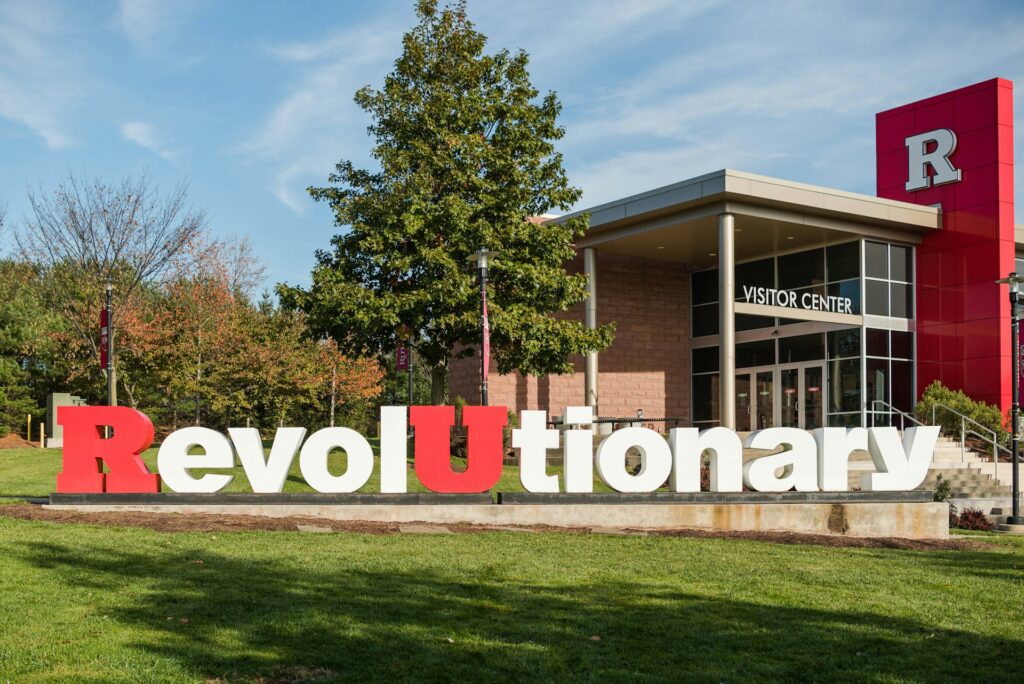
MPH programs in New Jersey are opening doors to one of the fastest-growing career fields in healthcare. The U.S. Bureau of Labor Statistics projects a 17% growth in health education and community health worker roles from 2021 to 2031. New Jersey’s public health jobs are expected to grow by approximately 13% over the next decade. Average wages range from $69,130 to $106,100.
The best MPH programs in New Jersey offer concentrations in a variety of areas to match your career goals, whether you’re interested in disease prevention, health policy, or community outreach.
1. Rutgers School of Public Health
Rutgers School of Public Health stands as New Jersey’s oldest institution for public health education. The program enrolls more than 600 MPH students and requires completion of 45 credits, which has six core courses covering traditional public health knowledge areas. Students must complete an applied practice experience, a practicum capstone and an interprofessional education experience before graduation.
The curriculum builds competencies in biostatistics, epidemiology, social and behavioral sciences, health services administration and environmental health sciences. Full-time students completing nine or more credits per semester can finish the degree requirements in as little as two years. Part-time students taking at least six credits per semester complete the program within four years. You must maintain a minimum GPA of 3.0, earn no more than nine credits with grades below “B” and complete all degree requirements within six years.
MPH Concentrations Offered
Rutgers offers 16 specialized MPH concentrations and gives you flexibility to arrange your education with specific career goals:
Concentration | Format |
Biostatistics | In-person |
Environmental Health Sciences | In-person |
Epidemiology | In-person |
Global Public Health | Online or In-person |
Health Systems and Policy | In-person |
LGBTQ Health | Hybrid |
Occupational and Environmental Medicine | In-person |
Occupational Safety and Health | In-person |
Population Aging | 100% Online |
Population Mental Health | In-person |
Public Health Nutrition | In-person |
Public Health Practice | Online or In-person |
Sexual and Reproductive Health, Rights and Justice | 100% Online |
Social and Behavioral Health Sciences | In-person |
Social Work and Public Health | In-person |
Urban Public Health | In-person |
The program also offers an MPH Option for Clinicians, designed for healthcare professionals seeking public health training.
Program Format and Flexibility
Rutgers provides multiple pathways to accommodate different learning priorities and schedules. Four concentrations are available online: Global Public Health, Population Aging, Public Health Practice and Sexual and Reproductive Health, Rights and Justice. The LGBTQ Health concentration operates as a hybrid program, while Global Public Health and Public Health Practice offer both online and in-person options.
Courses are available in-person, remote or online depending on your chosen concentration. Full-time students in the online Global Public Health program must complete nine credits per semester over five semesters, whereas part-time students complete six credits per semester over eight semesters. Priority application deadlines for fall semester admission fall on January 15, with regular deadlines on May 1. Spring semester applicants should submit by October 15 for priority or December 1 for regular admission.
CEPH Accreditation Status
The Council on Education for Public Health (CEPH) has accredited Rutgers School of Public Health through July 1, 2031. CEPH, recognized by the U.S. Department of Education, assesses schools every five to seven years. Rutgers completed its most recent detailed self-study in November 2023 and followed it with an external committee site visit in December 2023. The CEPH Board of Councilors voted to renew the school’s accreditation for a full seven-year term in 2024.
Admission Requirements
Applications are submitted through SOPHAS, the centralized portal for schools of public health. You must provide official transcripts from all post-secondary institutions attended, though applicants holding MD, DO, PhD, DDS, DMD, DVM, EdD, DrPH, ScD or PharmD degrees from accredited U.S. or Canadian schools receive transcript waivers for their undergraduate degrees.
The GRE General Exam is optional for all applicants. Your application package should include a one-to-three-page statement of goals addressing your interest in the program, preparedness and career aspirations. Two letters of recommendation are required, with at least one from an academic reference if you graduated within the past four years. International applicants educated in non-English-speaking countries must submit TOEFL or IELTS scores.
Applications are accepted on a rolling, space-available basis after regular deadlines. Relevant work experience is preferred but not mandatory.
Tuition and Financial Aid
Financial aid at Rutgers School of Public Health comes from federal and state agencies, foundations, corporations and the university. You must complete both the FAFSA and the RBHS Financial Aid Application to receive aid. Registration for at least 4.5 credits in fall and spring semesters, or 3.0 credits in summer, is required for federal financial aid eligibility.
The school offers several scholarship opportunities. The 21st Century Scholars program provides a competitive partial tuition scholarship to select incoming MPH students, who receive bi-weekly mentorship and participate in research projects outside their required coursework. The Professional Development Scholarship supports current students pursuing conference presentations, continuing education or other professional development activities requiring travel or registration fees. One full scholarship is available for students enrolled in the Population Aging program, with automatic consideration for all applicants who apply by March 15.
Full-time students enrolled in nine or more credits are billed for health insurance but may waive coverage if they have adequate existing insurance meeting university requirements.
2. Montclair State University MPH Program
Montclair State University’s 42-credit MPH program prepares culturally and professionally competent leaders in community health education through an interdisciplinary academic curriculum with a strong focus on social justice. New students can only enroll for the fall semester, and the program operates on a selective admission timeline. Early action applications submitted by December 15 receive decisions by January 29, whereas regular applications are due March 15. Applications receive review on a space-available basis after these deadlines.
The program trains public health practitioners and researchers with skills to plan, implement, evaluate and sustain efforts that boost population health and eliminate health disparities. Graduates pursue careers as practitioners and leaders in a variety of public health settings that include local and state government, public and private health agencies, voluntary and community-based organizations, schools, healthcare institutions, and policy organizations. Recent graduates have landed positions as HIV Project Officers, Program Specialists, Community Health Educators, Emergency Management Specialists, Vice Presidents of Community Outreach and Outcomes, and Public Health Fellows.
You can complete the program in a minimum of two years with summer courses, or within five semesters. Small class sizes promote mentorship opportunities, especially when you have close proximity to the New York City job market. The curriculum accommodates students from varying backgrounds and maintains a practice-oriented, population health-focused approach.
MPH Concentrations Offered
Montclair offers two primary MPH concentrations and specialized combined degree options. The Health Education, Promotion, and Advocacy concentration prepares you to become a leader in disease prevention, health promotion and community health. This concentration gives you the knowledge and skills to design, implement and evaluate programs that improve health outcomes in a variety of populations, with particular emphasis on advocating for health equity and social justice while addressing needs of underserved communities. Graduates pursue careers as policy advocates, program managers, community health educators, and outreach coordinators in nonprofit organizations, government agencies, schools and healthcare settings.
The Health Systems Administration and Policy concentration trains you to lead in the management and administration of healthcare systems. This concentration provides strategic, analytical and leadership skills needed to improve healthcare delivery and policy, with a strong focus on prevention, health equity and social justice. You explore core public health disciplines that include biostatistics, epidemiology, environmental health sciences, health policy and management, and social and behavioral sciences while gaining specialized expertise in health systems administration and policy development. Career paths include positions in hospitals, healthcare systems, government agencies, nonprofit organizations and policy groups.
The MPH/MBA dual degree program serves students pursuing careers at the intersection of public health and business administration. You accelerate your studies and graduate with two advanced degrees by counting select courses toward both degrees. This program builds expertise in health promotion, health equity and healthcare access while developing business foundations in strategic management, finance and innovative problem solving.
Additional combined degree programs pair the MPH with bachelor’s degrees in Public Health, Medical Humanities, and Psychology, offering concentrations in Health Education, Promotion, and Advocacy or Systems Administration and Policy. Students with a GPA below 3.4 are not eligible for combined program admission and must submit traditional applications to their graduate program of interest.
Program Format and Flexibility
The program consists of numerous course options designed to help you gain skills and knowledge for career success. So the flexible structure allows completion through various pacing options depending on your schedule and commitments. Full-time enrollment with summer courses enables completion within two years, offering an accelerated pathway for students focused on graduate studies.
CEPH Accreditation Status
The Council on Education for Public Health (CEPH) accredited Montclair’s MPH and BSPH programs in November 2020 for seven years, the maximum length of time CEPH will reaccredit programs of public health. CEPH, an independent agency recognized by the U.S. Department of Education, accredits schools and programs of public health. The MPH program first received accreditation at CEPH’s June 2015 meeting. The department submitted an interim report and hosted a site visit in Fall 2021, and continues to submit annual reports to CEPH.
Admission Requirements
You must pay a $60 application fee when applying to the program. The application requires submission through standard graduate application procedures with several key components. You need to provide a personal statement responding to questions about your goals for graduate study and future career, how your academic background and professional experiences demonstrate potential for success in the program, and any further information to consider for candidacy.
Two letters of recommendation are required from persons qualified to review your promise of academic achievement and potential for professional growth. To cite an instance, if you graduated within the past four years, at least one letter should come from an academic reference. You must submit a NACES transcript evaluation along with proof of English proficiency through standardized testing.
International students must achieve a TOEFL IBT score of 83 or an IELTS Paper score of 6.5. The GRE requirement is waived for applicants with a minimum GPA of 2.75 on a 4.0 scale or for anyone with a previous master’s degree. A current resume is not required but encouraged for submission.
Recent admission statistics show 51 students applied to the program, with 22 accepted and 22 enrolled.
Tuition and Financial Aid
Graduate tuition for General Master’s programs at Montclair State charges $909.00 per credit for both in-state and out-of-state students, with mandatory fees of $35.60 per credit, totaling $944.60 per credit. International students on F1 or J1 visas pay $1,018.00 per credit plus $35.60 in mandatory fees, totaling $1,053.60 per credit.
More than 72% of Montclair students receive some form of financial aid that includes grants, loans, scholarships, and tuition-free programs. The Financial Aid Department helps students and families explore options that include federal and state aid, student loans, grants, and work-study programs. Completing the FAFSA represents the most critical step to accessing financial aid, with submissions required no later than February 1 to be considered for grants, loans, and other forms of aid. The financial aid application deadline for awards falls on March 1.
Research assistantships, graduate assistantships, scholarships, loans, and Federal Work-Study programs are available, with financial support accessible for part-time students.
3. The College of New Jersey (TCNJ) MPH Program
The College of New Jersey’s MPH program distinguishes itself through customized faculty engagement where professors know your name and teach all your classes. This 45-credit interdisciplinary program requires completion of 15 courses and has a capstone experience. Full-time students finish in two years, while part-time enrollment extends the timeline to four or five years.
TCNJ operates with more than 40 public health partners providing professional opportunities to students. The capstone experience mandates at least 120 hours of internship work and an integrative paper designed to launch you into meaningful careers or position you to further studies. The program offers a 4+1 option where current TCNJ undergraduate students pursuing BS or BA degrees in relevant disciplines take five graduate courses toward MPH requirements during their junior and senior years. They complete the full degree in just one additional year beyond the undergraduate degree.
You can also pursue a dual Master of Business Administration/Master of Public Health degree.
MPH Concentrations Offered
The program offers three specialized tracks. The Epidemiology and Health Analytics track focuses on translational research to create healthier societies and encourage integration of population health research in fields such as engineering, healthcare systems, and business. This track has required courses in Research Methods to Public Health, Health Analytics, and Health Economics. Elective options cover topics from Public Health Genomics to Epidemiology and Aging.
The Health Communication track is about innovative ways to motivate healthy behavior and reduce health risks via institutions and agencies nationwide. Core requirements have Health and Risk Communication Theory, International Communication, Health Education in Practice, and Global Health and Risk Communication Campaigns.
The Global Health track increases awareness about international health systems, global diseases, and assessment techniques to specific health needs of countries worldwide. This concentration requires courses in Social Determinants and Health Inequities, Program Planning and Evaluation in Global Health, and Critical Issues in Global Health.
Program Format and Flexibility
TCNJ accommodates working professionals with two formats: online or hybrid. Hybrid classes meet in the evenings during 2.5-hour sessions starting at 5:30 p.m. or later. In-person sessions take place on the TCNJ campus. This flexibility allows you to customize your studies with different course tracks and follow your interests at your own pace.
CEPH Accreditation Status
The Council on Education to Public Health (CEPH) Board of Councilors accredited TCNJ’s Public Health Program at its March 5-6, 2023 meeting to a five-year term. CEPH procedures record the program’s original accreditation date as March 13, 2020, with the accreditation term extending until July 1, 2028.
Admission Requirements
TCNJ does not require the GRE to MPH applicants. You can apply through SOPHAS with deadlines of August 1 to fall matriculation and January 1 to spring matriculation. Direct applications through TCNJ’s Graduate Enrollment website accept submissions until August 15 to fall and January 10 to spring if you need additional time. SOPHAS charges $150 to the first program applied to and $60 to each additional program. Applications receive review on a rolling basis.
Tuition and Financial Aid
TCNJ offers the same tuition rates whatever where you live. Graduate assistants receive a tuition waiver of $500 per graduate credit taken, up to their approved academic year waiver maximum ranging from $3,000 to $10,000. Graduate assistants work 22 hours to each $500 tuition waiver they receive in a semester. A $75 non-refundable application fee applies to all applicants, though this fee is waived to students who attended the college before.
4. Caldwell University MPH Program
Caldwell University operates one of only three fully online MPH programs in New Jersey. It stands as the sole faith-based institution offering this degree in the state. The School of Nursing and Health Services designed this 42-credit program to line up with core competencies required for effective public health practice. The curriculum incorporates health equity, policy development, and epidemiological research. Leadership components are essential to advancing public health outcomes at local, national and global levels.
The program takes two years to complete over six semesters of part-time study. Courses run in asynchronous format over 7-week sessions throughout the academic year. This interdisciplinary curriculum provides a distinct focus on health education. Graduates are prepared for roles as Certified Health Education Specialists (CHES) and Master’s Certified Health Education Specialists (MCHES). The program emphasizes real-life applications through fieldwork and research collaborations. Partnerships with public health agencies will give workforce readiness upon degree completion.
MPH Concentrations Offered
Caldwell offers a generalized MPH degree rather than separate concentrations. The curriculum has required courses such as Applied Techniques: Cultural Health Promotion and Social Determinants of Health, Global Health, and Health Informatics and Digital Health. You can tailor your studies with electives like Biostatistics to Make Decisions in Public Health, Disaster Preparedness and Emergency Management, or Climate Change and Global Responses. The program provides an interdisciplinary viewpoint across disciplines of all types. These include Applied Behavior Analysis, Business, Education, Mental Health Counseling, Nursing and Psychology.
Program Format and Flexibility
The program operates entirely online. You can learn anywhere at your own pace while you retain interaction with faculty and peers. Most courses are offered in seven and eight week accelerated sessions that run throughout the year. This structure permits you to register as a full-time student for potential financial aid eligibility. Rolling admission with no formal deadline means you can begin the program in fall, spring or summer semesters.
CEPH Accreditation Status
The program is not CEPH accredited currently. But the curriculum follows the 22 foundational competencies listed by CEPH and the 8 Areas of Responsibility and Competencies listed by the CHES credentialing body. Caldwell University maintains accreditation from the Middle States Commission on Higher Education.
Admission Requirements
You need a bachelor’s degree from a regionally accredited college or university with a minimum 3.0 GPA. Completion of an undergraduate statistics course with a grade of C+ or better is mandatory. Your application requires two letters of recommendation and a writing sample essay. The essay should address how the MPH will help achieve your career goals. Caldwell accepts transfer of six graduate credits from an accredited institution, provided the credits were completed within five years of your initial registration.
Tuition and Financial Aid
Based on 2024-2025 tuition rates, Caldwell’s program is the least expensive per credit among its New Jersey counterparts. The university charges $20,124 per year for the program. Caldwell offers one of the lowest private tuitions in New Jersey. Financial aid is accessible to 98% of students through scholarships, grants, federal aid and state funding. You must complete the FAFSA using federal school code 002598 to access financial aid opportunities.
5. Rowan University MPH Program
Rowan University offers public health graduate education through a CEPH-accredited Public Health & Wellness Program. The university also provides a dual DO/MPH degree that combines Doctor of Osteopathic Medicine with a Master of Public Health through Rowan-Virtua School of Osteopathic Medicine and Rutgers School of Public Health. This five-year combined program serves students accepted to the School of Osteopathic Medicine who have taken the MCAT and gained acceptance into the MPH degree program.
The dual degree prepares medical professionals to view health from both individual patient and community views, with career opportunities spanning biostatistics, public health agencies and research institutions related to community health.
MPH Concentrations Offered
Specific concentration options for Rowan’s standalone MPH program require you to ask the university’s admissions office to learn about current offerings and curriculum details.
Program Format and Flexibility
Format details for the MPH program are not documented in publicly available materials. Prospective students should contact the university to get information about course delivery methods and scheduling options.
CEPH Accreditation Status
The Council on Education for Public Health granted Rowan University’s Public Health & Wellness Program original accreditation through July 1, 2030, with interim reporting required. This accreditation status confirms the program meets CEPH’s rigorous educational standards.
Admission Requirements
The DO/MPH dual degree application is limited to students already accepted to the School of Osteopathic Medicine who have completed the MCAT and received acceptance into the MPH degree program. Contact the university to learn about standalone MPH admission criteria.
Tuition and Financial Aid
Graduate degree programs at Rowan average $14,824 in tuition and fees annually. Specific financial aid opportunities for MPH students should be confirmed through the financial aid office.
6. Stockton University MPH Program
Stockton University’s MPH program centers on health equity and social justice. It develops evidence-based practitioners and leaders. The 42-credit curriculum addresses core public health competencies: Biostatistics & Epidemiology, Environmental Health Sciences, Health Policy & Management, Social & Behavioral Sciences, Communication & Leadership, Program Planning, and Diversity, Equity & Inclusion. You must complete an Applied Practice Experience with 200 contact hours under an internship supervisor. This becomes eligible after you finish at least 18 credits within the program. The degree must be completed within 14 academic semesters or seven years.
MPH Concentrations Offered
Stockton offers a generalist MPH without specific concentrations and provides complete training in all foundational public health disciplines.
Program Format and Flexibility
Courses are delivered in online/hybrid format with an intensive experience at Stockton’s Atlantic City campus. You can enroll full-time or part-time, with rolling admission and a priority deadline of July 1 for fall enrollment.
CEPH Accreditation Status
The program is seeking accreditation from CEPH, with an application submitted on April 9, 2025.
Admission Requirements
You need a bachelor’s degree with a cumulative GPA of 3.0 or higher, plus successful completion of undergraduate Biology and Statistics courses with grades of B or better. The application requires a $50 fee, graduate essay, two letters of recommendation, current resume, and official transcripts.
Tuition and Financial Aid
In-state graduate tuition costs $988 per credit, while out-of-state students pay $1,389 per credit. New incoming students are eligible for a one-time $2,500 scholarship applied to their first semester. Graduate assistantships provide tuition waivers ranging from one to nine credits per semester.
Get Your Start Today
The right MPH program depends on your specific career goals, learning priorities and financial situation. New Jersey offers diverse options, as we’ve seen above. Rutgers provides 16 concentrations. Caldwell offers an affordable online format. TCNJ takes a tailored approach. CEPH accreditation matters for certain career paths, but programs seeking accreditation can provide quality education.
Review each program’s format and concentrations carefully. Contact admissions offices and ask questions about financial aid and application requirements. The public health field needs qualified professionals, and these six programs provide pathways to launch your career in this growing sector.